Soil Testing & Analysis in Minnesota & Wisconsin
Every great lawn starts with what's underneath it. You can water consistently, fertilize on schedule, and follow every best practice in the book, but if your soil is out of balance, none of it will perform the way it should. Soil is the foundation that everything else depends on, and without understanding what's actually going on beneath the surface, even the best lawn care program is working at a disadvantage.
Soil testing is built into most of our programs because we believe great results start with great information. It's not an afterthought — it's the starting point.



What's Included in Our Soil Testing Service
Soil testing takes the guesswork out of lawn care. Rather than applying products based on general assumptions, we use real data from your specific lawn to make informed decisions about every treatment in your program.
Our soil testing service includes:
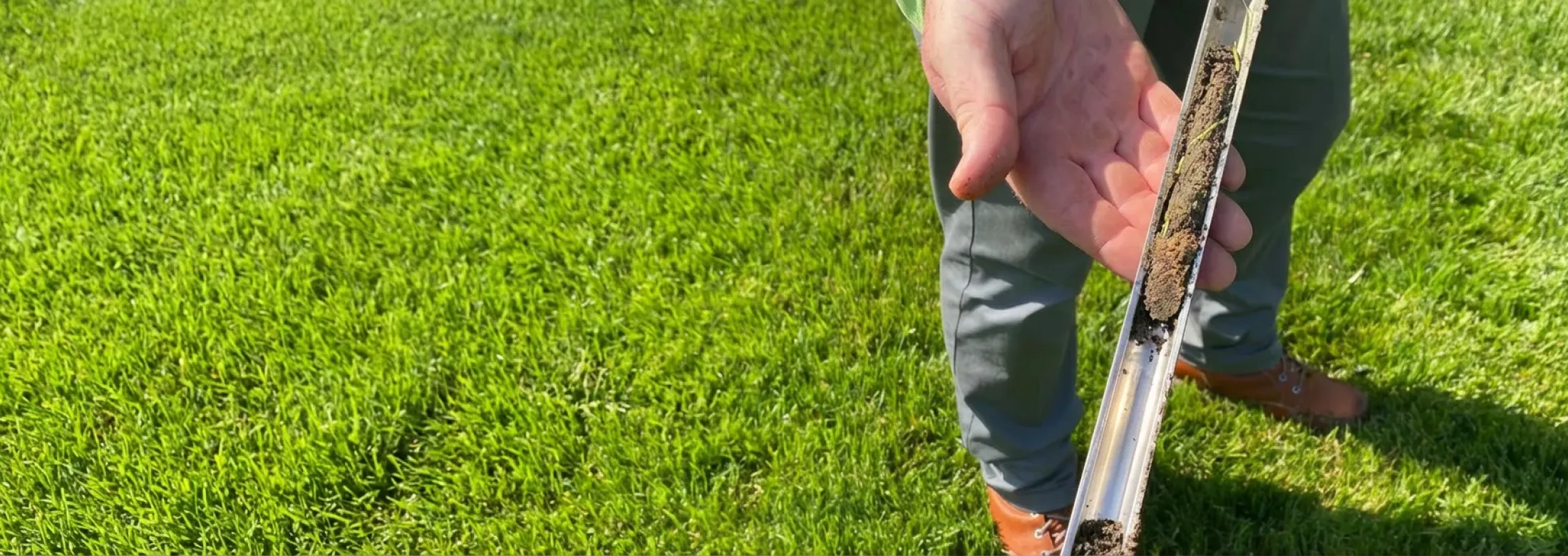
- Soil Sample Collection — Our technicians collect soil samples from multiple areas of your lawn to ensure we're getting an accurate picture of conditions across the entire property, not just one spot.
- pH Level Analysis — Soil pH determines how well your grass can absorb the nutrients available in the soil. Even if those nutrients are present in abundance, an imbalanced pH can lock them out entirely. We test and identify whether your soil is too acidic, too alkaline, or right in the optimal range for healthy turf growth.
- Nutrient Deficiency Identification — We analyze your soil for key nutrient levels including nitrogen, phosphorus, and organic matter, as well as secondary nutrients and micronutrients that play a supporting role in turf health. Deficiencies in any of these can hold your lawn back no matter how well it's otherwise cared for.
- Customized Treatment Recommendations — Soil test results don't just sit in a file. We use them to directly inform your fertilization program and any other corrective measures that will help your lawn reach its full potential.
- Ongoing Soil Monitoring — Soil conditions change over time, and we factor soil health into our ongoing assessment of your lawn throughout the season.
Your Lawn Deserves Lasting Results
At L.C.S. Lawn & Tree Service, Inc., we stand firmly behind our work. That's why we offer a satisfaction guarantee on our lawn care programs. If you're not thrilled with the results, we'll come back and re-treat at no extra cost. No questions asked.
We believe you deserve a lush, healthy lawn that lasts. Our guarantee ensures you get the value and peace of mind you're looking for, without any hassle or hidden fees.

What to Expect When You Work With Us
Soil testing at LCS isn't a standalone transaction — it's a built-in part of how we approach lawn care from the very beginning. When you start a program with us, soil testing is woven into the process so that every decision we make about your lawn is backed by real data from your specific property. Here's how it works:
- Laboratory Analysis — Samples are sent to a professional laboratory for analysis. Results provide a detailed breakdown of pH levels, macro and micronutrient concentrations, and other key indicators of soil health.
- Treatment Application — Corrective treatments are applied as part of your regular service schedule, seamlessly integrated into the program you're already on. No extra appointments, no extra hassle.
- Seasonal Reassessment — As the season progresses, we continue to monitor your lawn's response to treatments and adjust as needed. Soil health is an ongoing consideration, not a one-time checkbox.
Why Soil Testing Matters More Than Most Homeowners Realize
Soil testing is one of the most underutilized tools in residential lawn care and one of the most valuable. Most homeowners fertilize based on what the bag says or what worked for a neighbor, without any knowledge of what their own soil actually needs. Here's why that approach so often falls short:
- pH affects everything. Grass thrives in a specific pH range, typically between 6.0 and 7.0. When soil pH falls outside that range — which is common in the upper Midwest due to natural soil composition and heavy rainfall — nutrients become chemically unavailable to your grass even when they're present in the soil. You can fertilize all season long and still see poor results if pH is off.
- Not all soils are created equal. Soil composition varies significantly from one neighborhood to the next, and even from one corner of a yard to another. Sandy soils drain quickly and lose nutrients fast. Clay-heavy soils compact easily and retain too much moisture. Without knowing what you're working with, it's impossible to treat effectively.
- Nutrient imbalances are invisible. You can't see a nitrogen deficiency or a potassium shortage just by looking at your lawn. By the time deficiencies show up as visible symptoms — pale color, slow growth, poor stress tolerance — the lawn has already been struggling for some time. Soil testing catches these issues before they become visible problems.
- It makes every other treatment more effective. When soil pH is balanced and nutrient levels are dialed in, fertilizer absorbs better, grass grows stronger, and your lawn becomes more naturally resistant to weeds, disease, and environmental stress. Soil testing doesn't just improve one part of your program — it makes everything else work better.
Frequently Asked Questions
Where We Service
We proudly offer our lawn care services to residents in the Greater Twin Cities and Milwaukee metros, including these cities:
Minnesota
Wisconsin